Article by Marie-Thérèse Abdel-Messih Professor of English & Comparative Literature University of Cairo
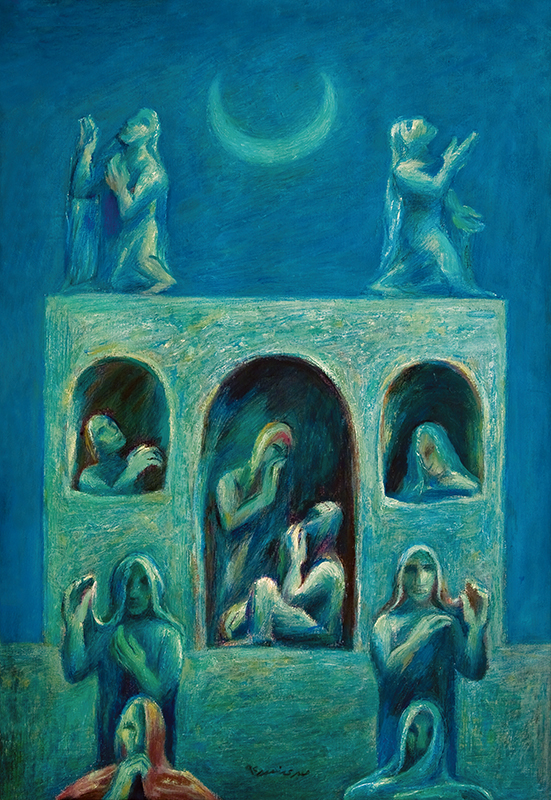
Sabry Mansour (b. 1943) belongs to the fourth generation artists engaged in processing an Egyptian cultural identity in visual language. After being trained in academic institutions following Western practices, he started his career by trying to reconcile his previous training with various modes of abstraction, derived from his cultural background. Abstraction in the art of ancient Egypt was both: aesthetic and functional; its transfigurations in Coptic and, later, in Arabesque developed the same concept, Islamic design being an abstraction of organic figures invested in decorative or architectural patterns. Mansour’s world fuses elements from Egyptian myth, and rural landscape within an imaginative nocturnal environment. For him, identity is less a past than a becoming, which in the process grapples with existential and cosmic questions. This is configured in his constant search for visual relationships with self and the communal, the terrestrial and the celestial, the temporal present and the ever-abiding past. For the citizen to become part of a collective there need be a shared visual language capable of sustaining communication. Read More
 Sabry Mansour